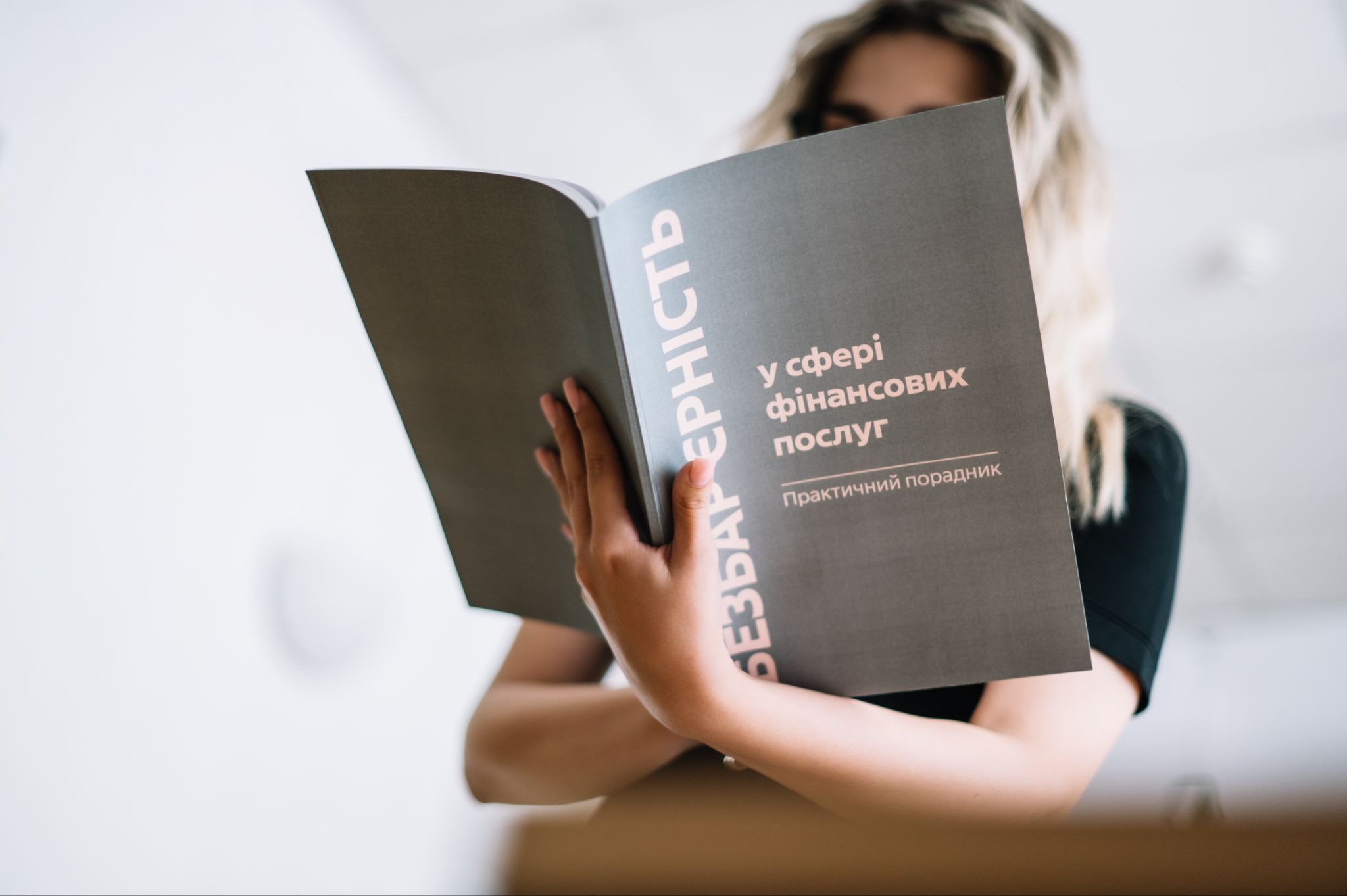
A practical guide on barrier-free accessibility in the financial services sector has been presented in Ukraine. The National Bank of Ukraine, the NGO "Bezbarrierneest" (Barrier-Free), PrivatBank, together with a number of Ukraine's largest banks and the digital payments leader VISA, have jointly presented a practical guide called "Barrier-Free in the Financial Services Sector."
This is Ukraine's first step-by-step instruction for building an inclusive financial infrastructure. The guide details how to arrange entrance groups, surrounding areas, and the interior space of financial institutions so that every person can use their services without obstacles.
In addition to requirements for architectural elements, the guide explains how to adapt printed materials, navigation signs, and signboards. A separate focus is placed on the digital space, discussing how to make websites and mobile applications accessible and understandable for all users.
"To be honest, when we first started on the path to barrier-free environments, the scale of the tasks ahead was a bit daunting. But today, barrier-free accessibility and client-centricity are the foundation of PrivatBank’s strategy. To make this a reality, we are investing significant effort into our internal culture. We are systematically training our team, conducting educational campaigns, and learning to listen to our clients. After all, no one knows their needs better than they do themselves. This is how the core guiding principle for all our processes was born: 'Nothing for clients without the clients themselves.' Our early results have served as motivation. For us, barrier-free accessibility is not about formal requirements, but about sincere respect for every client who trusts us," commented Natalia Savchuk, Deputy Chairperson of the Management Board of PrivatBank for Operations.
The publication provides a detailed analysis of complex situations that financial institution employees most frequently encounter in their work, and offers recommendations on how to act in such cases.
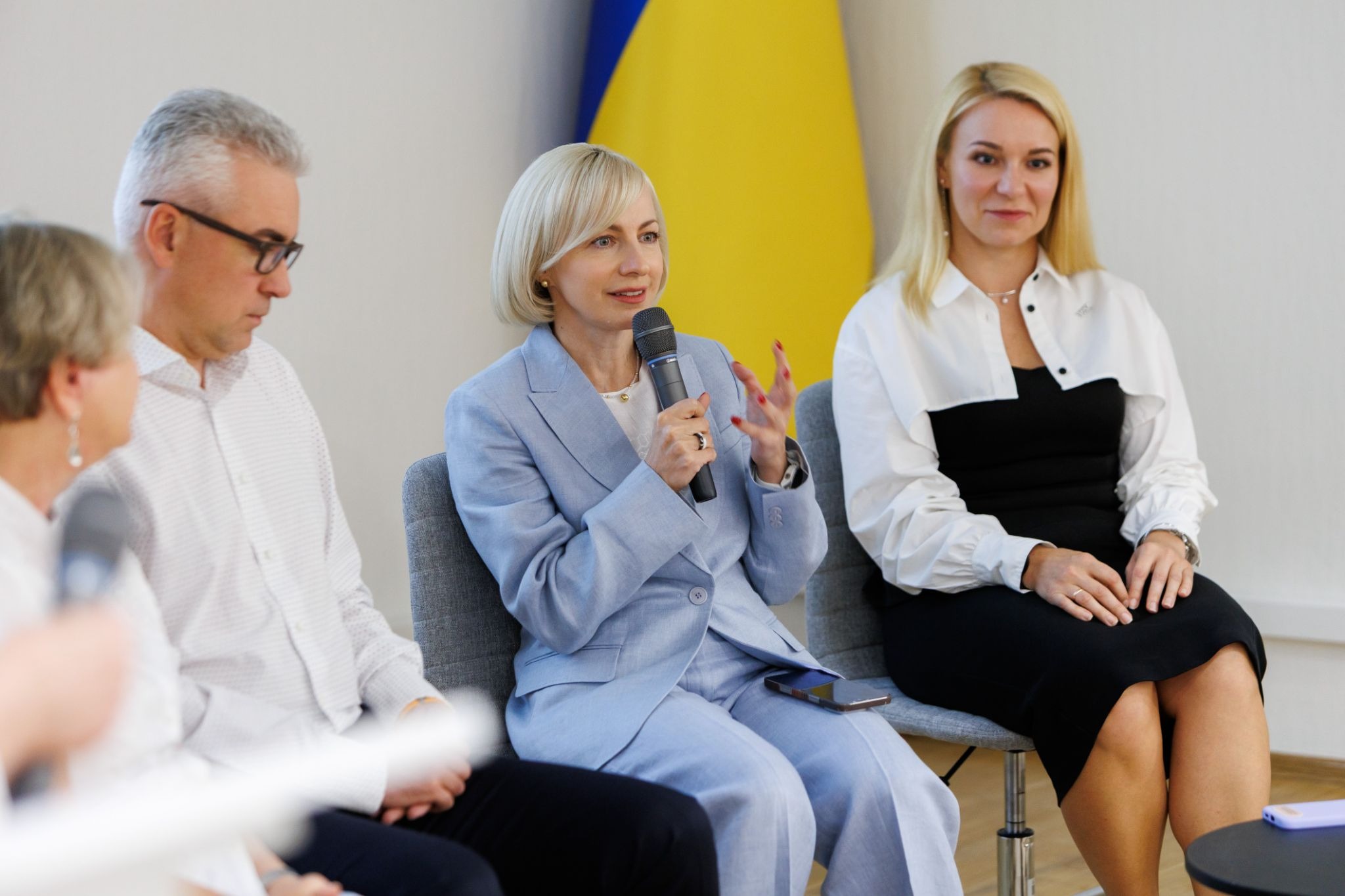
During the presentation, participants discussed how barrier-free solutions are already working in practice, the challenges that arise during their implementation, and why accessibility is an essential component of quality service today.

"This guide is not about abstract principles. Together with accessibility experts and banking teams, we sought to make it as practical as possible. Every day, financial institutions face dozens of concrete questions: how to ensure the accessibility of digital services, organize branch space, adapt service processes, and build correct communication with people of different life experiences and needs. That is why the guide contains recommendations, examples of solutions, and tools that managers, branch staff, and bank leaders can use. We wanted to create a document that they would turn to every time a practical question arises," emphasized Oksana Zbitnieva, Head of the NGO "Bezbarrierneest" (Barrier-free).
The special value of the guide lies in the fact that representatives of the financial sector became co-creators of the solutions proposed within it. Thanks to this, the publication can be useful for specialists in various fields—from designers and programmers to cashiers and branch managers.
The guide was developed within the framework of First Lady Olena Zelenska's "Barrier-Free" initiative. The guide is advisory in nature and is not a regulatory legal act.
You can download "Barrier-Free in Financial Services: A Practical Guide" on the NGO "Bezbarrierneest" website at this link.