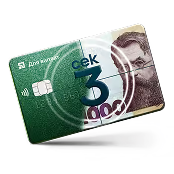
Transforming the culture of charity in Ukraine from spontaneous "card-to-card collections" to systemic, professional processes — this is the goal of the "Architecture of Trust" project, which the Center for Social Change and Behavioral Economics is launching jointly with PrivatBank.
Within the framework of the project presentation at the Khanenko Museum in Kyiv, an open dialogue took place among philanthropists, foundations, volunteers, government representatives, and financial institutions. During this event, the results of a large-scale study by the Institute of Sociology of the National Academy of Sciences of Ukraine were presented, showing how charitable standards are changing in Ukraine. The study confirms that over 80% of Ukrainians consider charity an important part of life, but only one in two knows who they can trust with their funds. Reputation, transparency, and accountability are becoming key factors in decision-making about assistance. Consequently, the public's demand for transparency and honesty is the foundation upon which we are building the "Architecture of Trust".
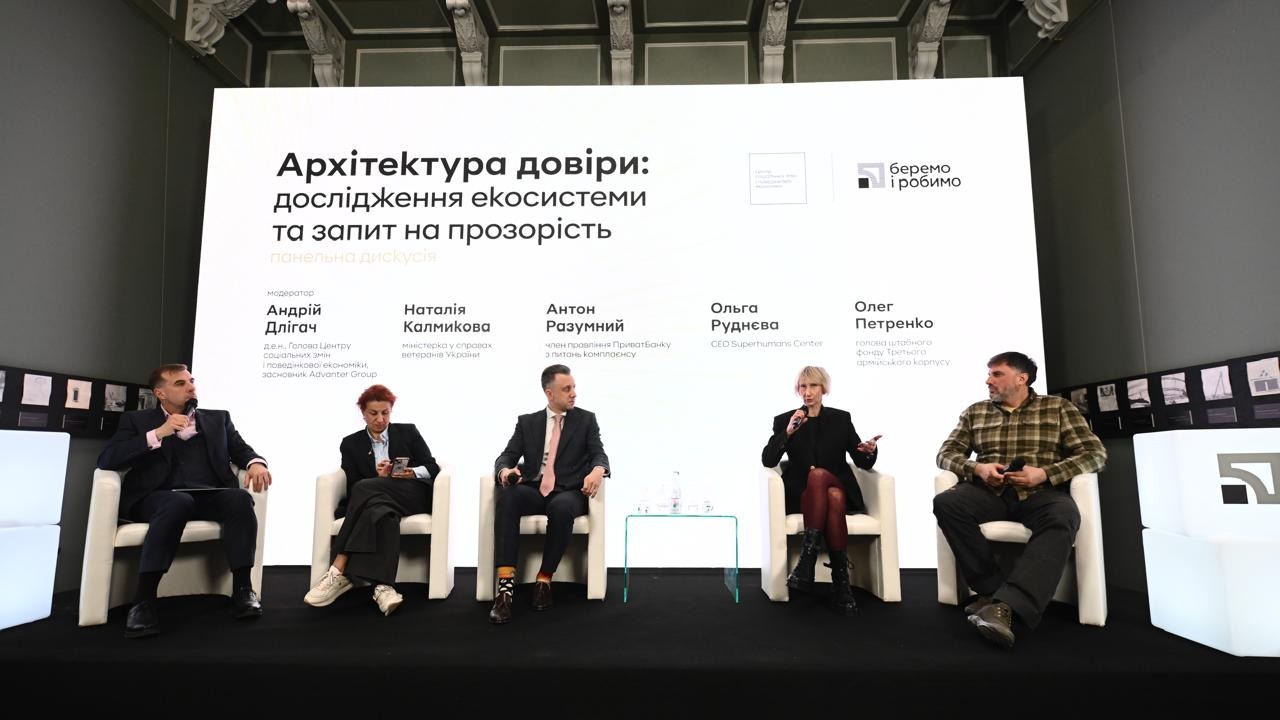
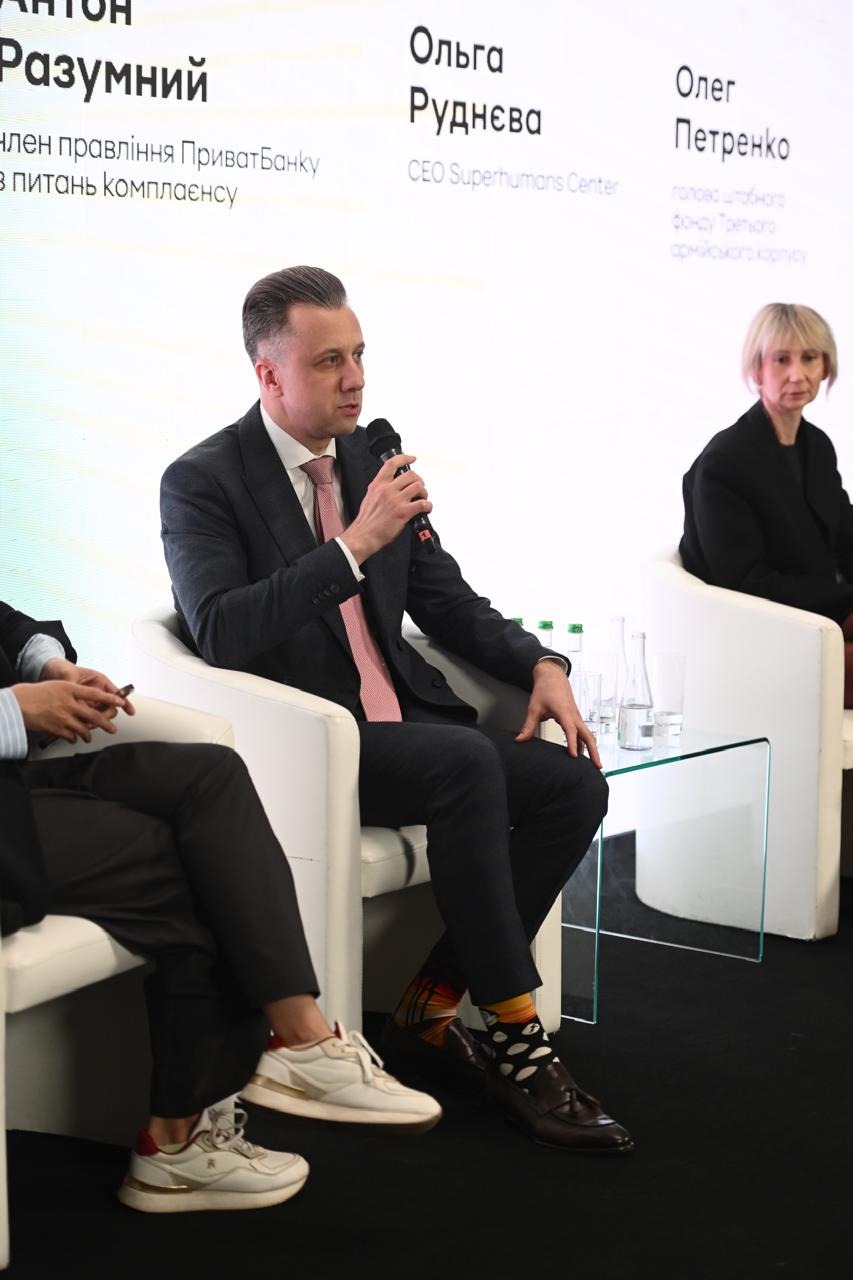
"Relationships with financial institutions are built on trust, transparent rules, and a sense of partnership. It is important to choose solutions that not only help raise funds quickly but also protect the donor and the volunteer's reputation. The security of donations must be subtle yet reliable — when the process is simple for the person but protected at the system level. Therefore, reliable tools allow us to scale up aid," asserts Anton Razumnyi, PrivatBank Management Board Member for Compliance.
Charity in Ukraine has become not just a social practice, but an important element of society's resilience. At the same time, fatigue and distrust can weaken this foundation if they are not consistently addressed.
"This project is about establishing new standards of charity, where a sincere desire to help is supported by systemic solutions, transparency, and trust. We are transforming the emotion of donating into a clear and safe process — with clear rules, knowledge, and support for everyone who helps," comments Andriy Dligach, Head of the Center for Social Change and Behavioral Economics, Doctor of Economic Sciences.
Trust is not born of control — it is born of openness and honesty, notes Nataliia Kalmykova, Minister for Veterans Affairs. "We do not hide from difficult topics — we respond to requests, meet with veterans (both men and women), explain decisions, and speak directly. Because trust does not appear on its own — it is formed through daily work and the state's open position. It is important for us that veterans are not only recipients of decisions but also their co-creators. This is how real impact and shared responsibility emerge. This is about a different quality of state policy — when decisions are formed together with those for whom they work, and when the state acts consistently, clearly, and openly".
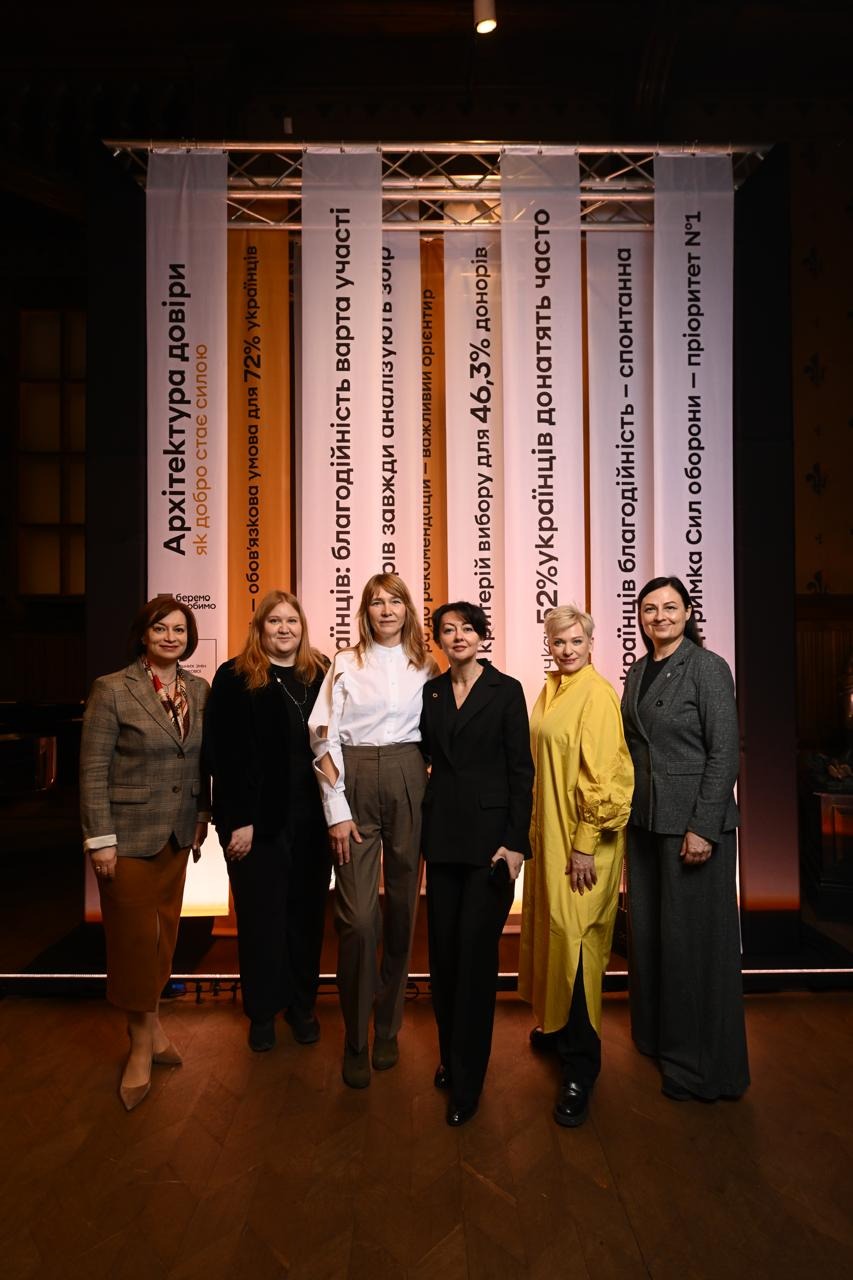
Trust is one of the key factors influencing the decision to help, says Serhiy Dembitskyi, Doctor of Sociological Sciences, Corresponding Member of the National Academy of Sciences of Ukraine (NASU). According to the research results, the reputation of those conducting the collection is crucial for 46.3% of Ukrainians. Furthermore, over 70% of respondents emphasized the need for openness and accountability of organizations and foundations.
Public accountability is not always compatible with front-line security, especially when it comes to weapons or equipment, notes Oleh Petrenko, Head of the Staff Foundation of the Third Army Corps. Therefore, protected trust comes to the fore: when processes are not necessarily public but have independent confirmation. At the same time, effectiveness is key to trust. Business partners of the Third Army Corps view aid as an investment in success on the front line, as this military unit has already proven its effectiveness.
"Charity in Ukraine long ago ceased to be just financial aid. It is the language of our solidarity, which we use to speak with the world and with each other," emphasizes Olha Rudnieva, CEO of Superhumans Center. "Charity today is our way of contributing to victory. And our task is to build the trust of people who are ready to support charitable projects through our actions. Today, every donation matters, and every hryvnia works transparently and effectively toward a shared result".
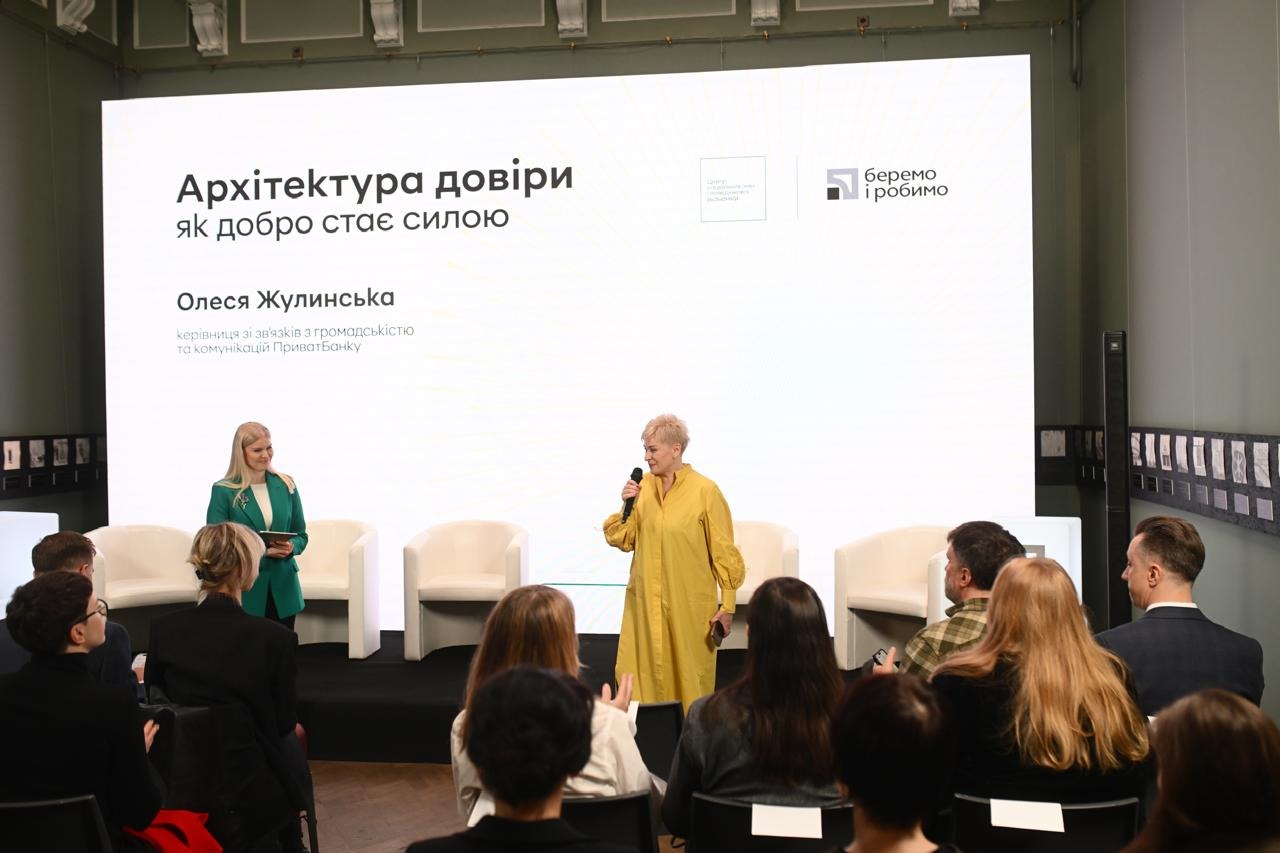
"Every action — even the smallest donation — builds great trust and gradually changes society today. At PrivatBank, we see how the culture of charity is transforming: while the average amount of aid was once 16 hryvnias, it is now 937, and Ukrainians have transferred a total of 1.8 billion hryvnias through our tools. At the same time, it is important for us to honestly admit that even when it seems like we are doing everything right, we need to listen and hear feedback. That is why we gathered our partners for the first time and disclosed the research results—to start a broader conversation," says Olesia Zhulynska, Head of Public Relations at PrivatBank.
It is symbolic that the Khanenko Museum, home of distinguished Ukrainian philanthropists, became the platform for the conversation about trust. "According to world statistics, museums have one of the highest levels of public trust — and for us, this is not a privilege, but a great responsibility. Today, we see that the power of a museum is much greater than commonly imagined. It is not an 'institution with an outstretched hand,' but a space that can unite and redirect resources to where they are needed most," noted Yuliia Vahanova, General Director of the Bohdan and Varvara Khanenko National Museum of Arts.
The dialogue participants are convinced that charity in Ukraine is transforming. Transparency and responsibility are ceasing to be a choice and becoming a standard. This is a transition to a European model where trust is based not only on emotions but on clear and understandable rules.